
Bible Safari: Adventure Truth
Kingdom Studios ProductionsTrivia
0.00.00 Reviews
- Version
- 1.23
- Installs
- 10.00K
- Age Rating
- Everyone
Screenshots
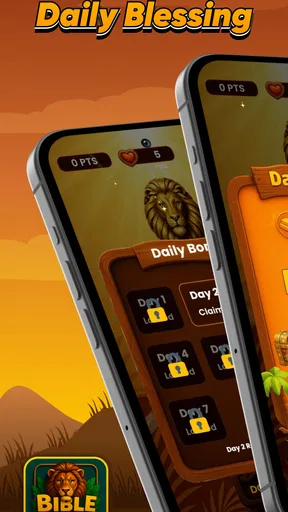




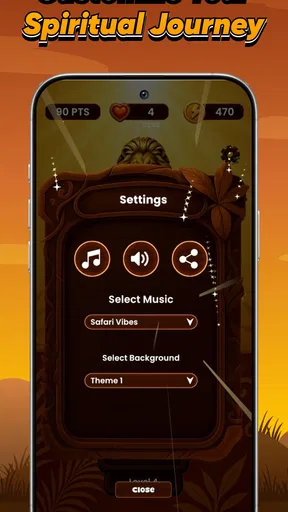
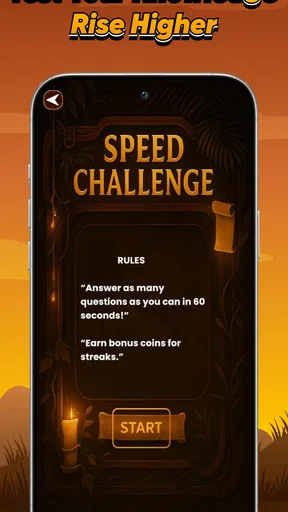
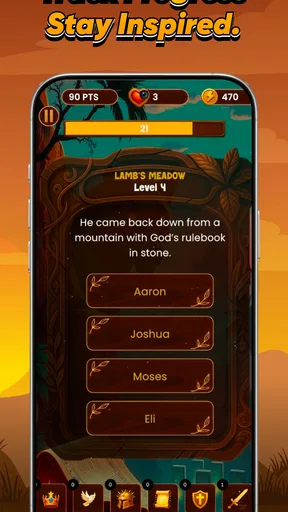
Our Review of Bible Safari: Adventure Truth
 Analysis by Appyee
I found Bible Safari: Adventure Truth most interesting when I treated it as a short daily learning game rather than as a full-scale adventure. It combines Bible trivia with word puzzles, giving me a light way to revisit Scripture while still having something game-like to do. My overall view is positive, but with an important qualification: this is best for people who enjoy faith-based quiz content and want regular, bite-sized practice, not for players looking for a deep story, complex exploration, or a broad general-knowledge challenge.
That distinction matters because the name suggests a larger journey than the experience actually needs to provide. The appeal is in the repeated rhythm of reading a question, thinking through a possible answer, solving a word-based challenge, and collecting rewards. I can imagine opening it during a quiet morning, while waiting for an appointment, or after dinner when I want something more purposeful than endlessly scrolling. It feels designed to turn spare minutes into a small Scripture-focused habit.
How the trivia and word-puzzle combination works in practice
I find the mix most useful when I treat the trivia and word puzzles as two different ways to check what I remember, rather than as interchangeable rounds. A practical approach is to pause over a tricky name or answer and save it as a topic to revisit in Scripture later; that turns a quick session into a small study prompt. The distinction also helps set expectations for the kind of challenge each format offers.
A focused approach to Bible knowledge
The clearest strength is its narrow subject. Instead of mixing Bible questions with sports, celebrities, geography, and random facts, the game keeps its attention on Scripture. That focus makes each question feel connected to a larger reason for playing. I am not simply trying to protect a streak or beat a timer; I am also testing what I remember and noticing which parts of my knowledge are less secure.
For someone who already reads the Bible, the trivia can act as a useful recall exercise. Reading a passage and answering a question are different mental activities. Reading is often passive, while a quiz forces me to retrieve names, events, teachings, and details without looking them up immediately. That retrieval process is where the game has genuine value. Even when I get an answer wrong, the question can point me toward a topic worth revisiting later.
I would not treat every answer as a substitute for careful study, though. A trivia format naturally compresses complicated passages into short prompts and expected responses. That is fine for review, but it is not the same as examining context, comparing translations, or discussing interpretation. I see the game as a doorway into Scripture, not as a replacement for a study Bible, church class, devotional reading, or thoughtful conversation.
Why the word puzzles add something useful
The word-puzzle side gives the experience more variety than a plain multiple-choice quiz. If every round were only a question followed by an answer, the routine could become predictable quickly. Word challenges change the pace and make me engage with spelling, recognition, and recall in a different way. That small shift is important because it gives the game a more active feeling without turning it into an intimidating academic exercise.
There is also a practical learning advantage in moving between formats. A question may test whether I know a fact, while a word puzzle may make me recognize a biblical name or term from its letters. Those are related but not identical skills. When I use both, I get a better sense of whether I truly remember something or merely recognize it when it appears among several choices.
One useful habit is to pause after a difficult puzzle instead of immediately treating it as a disposable challenge. I can write down an unfamiliar name or theme and look it up during my normal reading time. That turns a few minutes of play into a personal list of study prompts. It is a more rewarding workflow than simply chasing the next reward, and it helps the game remain useful even after the novelty fades.
Rewards are helpful, but they should stay secondary
The reward structure gives me a reason to continue from one session to the next. Progress feels more satisfying when correct answers lead to something visible, and the game’s design clearly wants daily participation rather than one long sitting. For casual players, that can make Bible review easier to maintain.
Still, I think the healthiest way to approach the rewards is as motivation, not as the main purpose. If the reward loop becomes more important than understanding the question, the educational side loses its advantage. I recommend using the rewards to encourage consistency, then judging a session by what I remembered or learned. That mindset prevents the game from becoming just another reflexive collection exercise.
What the basic app details mean for potential players
Kingdom Studios Productions is the developer behind this trivia game. It is free to start, which makes it easy to try without committing money first. Optional purchases range from ninety-nine cents to nineteen dollars and ninety-nine cents per item, so I would check the purchase flow carefully and decide in advance whether I want to spend anything. The free entry point is a real advantage, but the presence of purchases means the experience deserves the same budget awareness as any other free mobile game.
The game is rated for Everyone, making it suitable for a broad audience from an age-rating perspective. That does not mean every question will match every player’s reading level or Bible background. Younger players may benefit from playing with a parent, teacher, or youth leader who can explain unfamiliar references. Adults who have studied Scripture for years may find some rounds comfortably easy, while newcomers may need time with the underlying passages.
It was released on November 7, 2025, and the current version is 1.23. The minimum operating-system requirement is Android 7.1, which is helpful for people using older compatible devices. The game has passed ten thousand installs, so it is not an entirely unknown experiment, although it remains much smaller in reach than the biggest quiz titles. That smaller footprint may appeal to readers who want a focused faith-based game rather than a crowded mainstream platform.
The everyday scenario where it makes the most sense
My favorite use case is a ten-minute routine. I would open it with coffee, play a few questions, and note one answer that I want to investigate in a Bible passage later. On a busy day, that feels achievable in a way that a long reading plan may not. The game provides a clear stopping point, so I do not need to reserve an entire evening or prepare a study session before beginning.
It could also work well for a family waiting situation. A parent might let children answer individually, then use a missed question as a conversation starter. The important part is not turning the session into a test of who knows the most. The better approach is to ask why an answer is correct, where the event appears, and what the group remembers about it. The game supplies the prompt; the people playing supply the discussion.
Youth groups and small study circles could use it as an opening activity, particularly when the goal is to get everyone talking before a more serious lesson. I would not make it the entire lesson, because trivia alone cannot provide the depth or pastoral sensitivity of a guided discussion. Used briefly, however, it can lower the barrier to participation for people who are shy about speaking first.
Where it compares well with ordinary alternatives
Compared with a standard Bible quiz app, the word-puzzle element gives this game a more varied rhythm. A conventional quiz may be better if I want rapid-fire testing or a large bank of question formats, but Bible Safari: Adventure Truth has a more relaxed learning-game identity. It is easier to approach when I want a small activity rather than a serious examination.
Compared with a devotional app, it is more interactive but less reflective. A devotional usually gives me structured reading, commentary, and a theme for prayer or meditation. This game gives me questions and puzzles, which can wake up my memory but cannot replace quiet reflection. If my priority is spiritual reflection at the start of the day, a devotional tool is likely the better primary choice. If I already have that habit and want a playful review afterward, this game fits more naturally.
Compared with a printed Bible trivia book, the mobile format is more convenient for short gaps in the day. I do not need to carry anything, and the reward loop adds a sense of progression that paper cannot easily provide. The trade-off is that a book may encourage slower discussion and can be easier to annotate. For group use, I might prefer the book when the goal is conversation, while choosing the game for individual practice.
It also differs from broad trivia platforms because its subject is intentionally limited. Someone who wants variety across hundreds of topics will probably feel constrained here. That is not a flaw in itself; it is the central trade-off. The narrower scope creates relevance for Bible learners but removes the surprise and breadth that make general trivia games exciting.
The limitation I noticed most clearly
The biggest weakness is the risk of repetition. A focused Bible game has a finite thematic center, and once I become familiar with its question style, the challenge can feel less like discovery and more like maintenance. That may be perfect for revision, but players who expect a constantly expanding adventure could lose interest.
The word puzzles do help, yet they do not automatically solve the problem. If the underlying knowledge becomes familiar, changing the presentation can only refresh it for so long. I would therefore recommend approaching the game in cycles: play regularly for a period, take a break when the questions feel automatic, and return when I want to refresh specific areas. That is more realistic than expecting one app to remain equally exciting forever.
Another limitation is the tension between accessibility and depth. A game aimed at Everyone must keep its basic interaction approachable, but experienced Bible readers may want more context around an answer. If I already know the fact, the question can pass too quickly to teach me anything new. In that situation, I get more value by using each prompt as a reminder to read the surrounding passage rather than expecting the game itself to provide a complete explanation.
The purchase range is another point worth considering. Free access lowers the risk of trying the game, but optional items can change how some players experience progression. I would not spend simply because a reward is tempting. I would first play long enough to decide whether the core trivia and puzzles genuinely fit my routine. If they do not, paying more will not fix the mismatch.
Who should install it, and who should choose something else
I think it is a good match for Christians who want a casual Scripture quiz, families looking for a shared faith-based activity, and beginners who prefer learning through short questions instead of starting with a dense study resource. It may also suit adults who know the main biblical stories but want to identify gaps in their recall. The game’s free starting point makes that trial especially straightforward.
It is less suitable for someone seeking theological depth, detailed commentary, or a serious reading plan. It is also not the right pick for a player who wants open-ended exploration, character development, or a large narrative campaign. The title may evoke an adventure, but I would set expectations around trivia and word puzzles rather than a traditional role-playing journey.
Players who dislike reward-driven mobile design should think about whether the format will feel motivating or distracting. I can keep the focus on learning, but that requires some self-control. If I know I tend to chase points, streaks, or purchases instead of absorbing the material, a printed resource or a quiet reading app may serve me better.
For parents, the Everyone rating is reassuring as a broad content classification, but I would still play alongside younger children at first. The benefit is not only supervision; it is the chance to explain context and make sure a child understands that a short answer does not tell the whole story. That shared approach turns a simple game into a more meaningful learning activity.
Practical ways to get more from each session
I would begin by keeping sessions short and consistent rather than attempting to exhaust every available challenge. A few attentive questions are more valuable than a long distracted run. Afterward, I would record one unfamiliar person, place, event, or term. That creates a personal review list and gives the game a purpose beyond immediate entertainment.
A second useful approach is to separate confidence from correctness. When I answer quickly, I should still ask whether I knew the answer or merely recognized a familiar-looking option. Slowing down on easy questions can reveal weak memory that speed hides. On difficult questions, I would avoid guessing repeatedly just to move forward; the better payoff comes from checking the relevant passage later.
For group play, I would let everyone explain their reasoning before revealing the answer. This makes the activity less competitive and gives quieter participants a way to contribute. It also exposes misunderstandings that a simple score would hide. The game works best as a conversation starter when the people using it add context themselves.
Finally, I would treat purchases as optional entertainment spending, not as a requirement for spiritual growth. The central value is the act of recalling and discussing Scripture. If the free experience supports that goal, it may be enough. If I find myself thinking more about unlocking rewards than learning, that is a clear sign to step back.
My final assessment of the experience
After weighing its strengths and limits, I see Bible Safari: Adventure Truth as a focused, approachable trivia game with a worthwhile educational angle. Its strongest idea is not the promise of a huge adventure; it is the combination of Bible recall and word play in a format that fits small pockets of time. That makes it more useful than a bare quiz for some players, while still keeping it lighter than a study resource.
I would recommend it to a friend who wants a gentle daily prompt to revisit Scripture, especially if that friend enjoys puzzles and does not need advanced commentary. I would suggest trying the free version first, setting a modest routine, and using missed questions as invitations to read further. That approach gives the game room to succeed on its own terms.
My verdict is favorable but specific: choose it for accessible Bible-focused practice, family conversation, and short learning sessions. Skip it if you want a deep campaign, extensive theological explanation, or unlimited trivia variety. With realistic expectations, the game can turn a few idle minutes into a small but meaningful habit, and that is where its value is clearest.
Verdict
Strengths of Bible Safari: Adventure Truth
- Engaging Bible-based adventures make learning scripture feel interactive.
- Colorful visuals and playful challenges are appealing to younger players.
- Short activities work well for quick play sessions.
- Encourages children to explore biblical stories and moral lessons.
- Family-friendly content without violent or mature themes.
Limitations of Bible Safari: Adventure Truth
- Some lessons may feel too simple for older children or adults.
- Progression can become repetitive after extended play sessions.
- Certain features or content may require in-app purchases.
- An internet connection may be needed for parts of the experience.
- Reading-heavy sections could be difficult for younger children without help.
Similar Picks in This Category
View All
Millionaire 2026 Quiz & Trivia
Quiz & Trivia Games by Submarine Apps4.5

Brain Test 2: Tricky Stories
Unico Studio4.7

Trivia Crack: Brain Quiz Games
etermax4.4

QuizzLand. Quiz & Trivia game
Quiz & Trivia Games by Mno Go Apps4.8

Brain Test: Tricky Puzzles
Unico Studio4.7

Logo Quiz
bubble quiz games4.5
Frequently Asked Questions
What is Bible Safari: Adventure Truth?
Bible Safari: Adventure Truth is an educational adventure game designed to help players explore Bible stories, characters, and teachings through interactive challenges. Instead of simply reading passages, you progress through themed environments, answer questions, complete activities, and discover information connected to Scripture. It is aimed primarily at children and families, although adults may also find it useful for introducing or reviewing biblical knowledge.
Is Bible Safari: Adventure Truth suitable for children?
The game is mainly intended for younger players, making it suitable for family use, Sunday school activities, or independent learning with parental guidance. Its adventure format and question-based gameplay can make Bible topics easier for children to understand. Parents should still review the content and supervise younger users, especially because reading ability, religious background, and familiarity with biblical stories can affect how enjoyable and accessible the experience feels.
Does the game require an internet connection?
Internet requirements may depend on the version installed and the features being used. Basic gameplay content may be available after installation, but online access can be necessary for downloading additional resources, receiving updates, displaying certain content, or accessing external links. Before traveling or allowing a child to play offline, it is a good idea to open the game once while connected and confirm which activities remain available without internet access.
Is Bible Safari: Adventure Truth free to download?
The application may be available as a free download, but availability of paid features, advertisements, optional purchases, or additional content can vary by platform and region. Check the Google Play Store or Apple App Store listing before installing to see the current pricing information and purchase details. Parents should also review device payment settings so that children cannot accidentally authorize purchases while playing.
Does Bible Safari: Adventure Truth include in-app purchases or advertisements?
The presence of advertisements and in-app purchases can differ according to the release, device, and store listing. Users should check the app’s current permissions, pricing section, and family-safety information before downloading. If children will use the game independently, parental controls are recommended. Even when the main experience is free, optional upgrades or extra content may be offered, so supervision helps avoid unexpected costs.
Play our best games!


